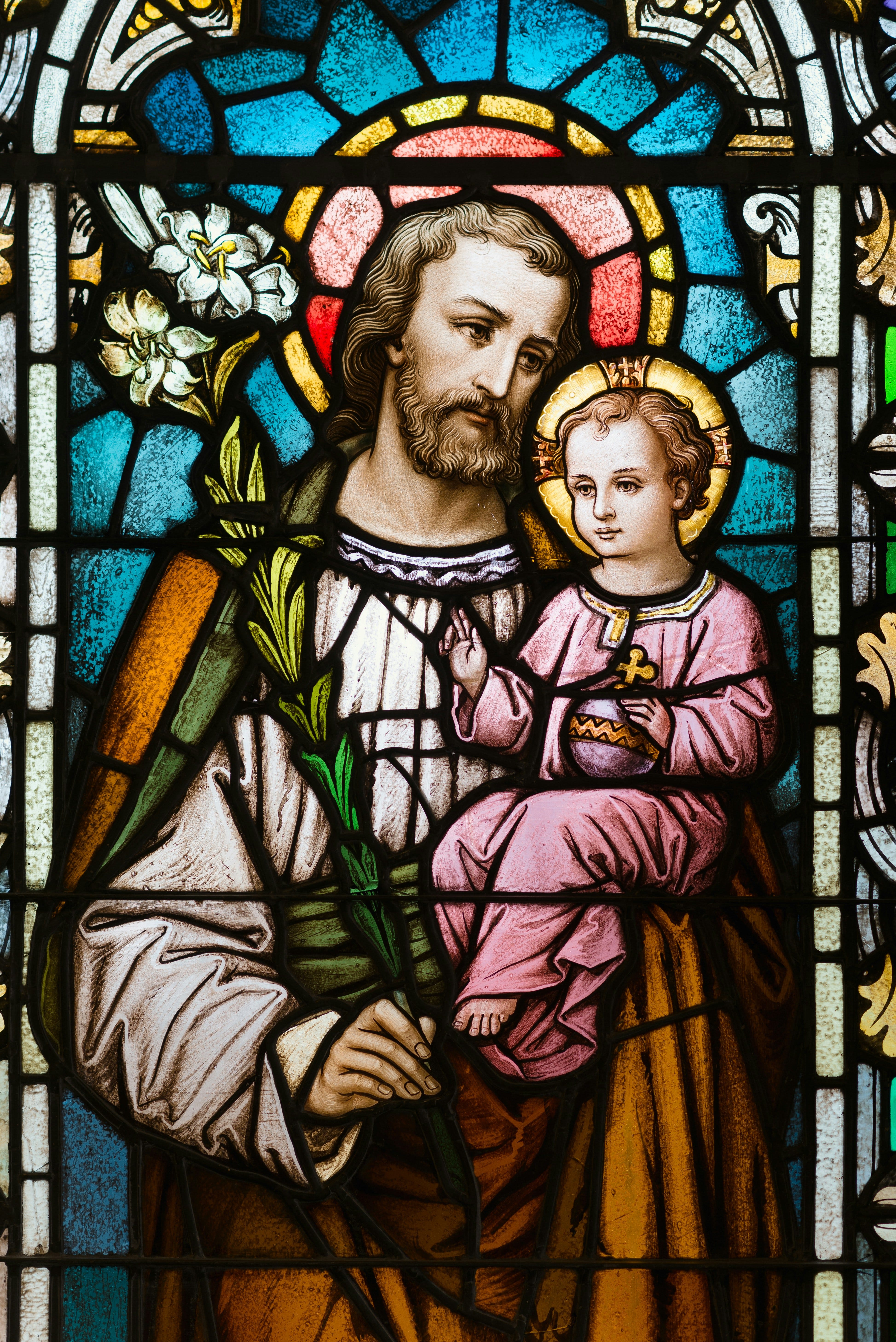
Joseph, did you know?
Matthew 1:18-24

Maybe it’s the mother in me, I can’t help but think of Mary when I come across Matthew’s scant account of the birth of Jesus, focused solely on Joseph’s experience of it. I find myself grateful for Luke’s accounting, where we are told of Mary’s remarkable response to Gabriel’s honestly outlandish and rather scary (more on that below) news:
“Here I am, a servant of the Lord. Let it be with me according to your word.”
And then, upon visiting Elizabeth, she sings the Magnificat, showing that she very well knows that God’s power turns the world upside down: casting the mighty from their thrones, filling the hungry with good things, lifting the lowly, sending the rich away empty, and scattering the proud in the imaginations of their hearts. Mary just “gets it,” assents to her role in it, and boldly proclaims God’s justice in the face of the world’s injustice.
Now, turning back to Matthew, I will say, Joseph does seem like an alright guy, really–inclined to quietly divorce Mary rather than subject her to public disgrace and possibly biblical punishment. According to Deuteronomy, after all, “If there is a young woman, a virgin already engaged to be married, and a man meets her in the town and lies with her, you shall bring both of them to the gate of the town and stone them to death, the young woman because she did not cry for help in the the town and the man because he violated his neighbor’s wife. So you shall purge the evil from your midst.” (Deut. 22:23-24)
Some say that, despite passages like this one, stoning was maybe not so widely practiced. At the same time, you’ll recall that John’s gospel recounts Jesus intervening on behalf of a woman accused of adultery. The terrorizing potential was there, whether regularly observed or not; the law was on the books and at least sometimes carried out. Lest we chalk it up to the past, we might remember the violence of our world today, too… particularly the prevalence of intimate partner violence, often arising out of situations not too different from this one.
When we’re used to hearing the Christmas story told in carols or by children in pageants or Linus in Peanuts, the violence of the whole thing gets lost in the sweetness of it. But let’s be clear, things are extraordinarily bad for Mary. She could be stoned. Her entire family could be disgraced. But her betrothed initially chooses the kinder path of quietly divorcing her. While not a brutal execution, this still leaves her to fend for herself in a world where unwed mothers and fatherless children were unlikely to fare well.
Joseph may think he is doing the right thing, even as it will have disastrous consequences for his young bride and her child. Of the available options in a patriarchal society, this is in fact the kindliest of them. Perhaps he was so-moved because he already knew that Mary had not been unfaithful. The text, after all, says that she was “found to be pregnant from the Holy Spirit” from the outset, which seems to make it a given before Joseph resolves to divorce her. If he knows the pregnancy is by the Holy Spirit already, he may see no need to unduly punish Mary. Holy Spirit or no, he still may see no need to remain in any relationship to her or to her child.
But Joseph, did you know?
This, I think, is where an angel had to come and challenge him to grow his imagination, to help him see what Mary knows – that God is turning the world upside down and that he is invited to be part of it. In the world as it was, women and children were viewed as essentially a man’s property. Thus, if a woman were to bear the child of another, she would have failed in her function as his property, rendering her and the child worthless to him. Regardless of whatever situation led to the illegitimate pregnancy, be it willing adultery, coercion and sexual violence, or even immaculate conception, the two are worthless to him under such a patriarchal arrangement, where their value is only as it relates to him. He can thus have them killed, publicly disgraced, or can discreetly divorce the mother, leaving her to face the consequences alone. No matter her own agency or lack thereof in creating the circumstances, she is no longer of value.
Scripture tells there’s a way to love better, that upends a system that denies human beings their full worth. And a way for him, too, to participate in the work of the Holy Spirit.
Joseph’s imagination has to expand, to see a role for himself in the world as God wants it to be and to see that discarding Mary and her child is not the kind of act that reflects the fullness of God’s love, even if it seems like the right choice among the ones the world presents. “Do not be afraid” to be a part of this, the angel says. Do not be afraid to imagine something fuller, bigger, more loving, more just, more holy… God with us.
I hope for Mary’s clarity and conviction in my own life, but I think more often than not, I’m like Joseph. I try to discern the right thing to do, but I can’t see past the way the world is currently ordered and my place within it. I may even think I’m doing the kind and just thing, but really it’s just upholding the existing power structures. Turns out, it asks a lot of us to do the work of casting the mighty from their thrones; it may even ask us to divest of our own power. Turns out, a lot of feel-good charity does little to actually change the status quo.
But the thing is, Joseph still finds his way to being in relationship with Christ–as his dad, no less!–and to being part of God’s plan for the world, even if that way was not initially apparent to him. I don’t know if I’ll ever get an angel to visit me, but we can draw lessons from the angel’s visit to Joseph. And the first thing the angel tells him is “do not be afraid,” that persistent recurring message of scripture. The Holy Spirit’s work can take us to uncomfortable places and can seriously push our limits. Joseph found Mary to be pregnant “from the Holy Spirit” and was ready to bail. Maybe we, too, sense her movement among us but fear the change, challenge, and discomfort that comes with it. The angel reminds us to not be afraid. Then, maybe we can allow the Spirit to work through us.
But Joseph also models a kind of world-upending action that feels within reach. Don’t get me wrong, I absolutely love the Magnificat, but I haven’t the slightest idea how to get into a throne room, or a billionaire’s board room, or whatever the halls of power are myself–much less, how to cast anyone down if I ever made it there. What Joseph shows is that in our everyday relationships, we can do the surprising thing that defies the ways of the world… We can forgive one another in a society that prizes punishment and retribution. We show hospitality to someone we’ve been conditioned to exclude. We can listen to, try to understand, and ultimately love our enemies–ideological, political, or otherwise. The grandness of the Magnificat’s description of God’s justice still fits in the small places of our lives and relationships. Joseph shows us how.
In these small acts of big love, we do turn the world upside down, brick by brick. It happens through Mary and Joseph, both. It happens through you and me.